
The rent a property could earn is only part of the decision between short lets and long-term renting. What matters is how much income remains after expenses, how reliably that income is collected, and how the arrangement fits the owner’s plans.
Short lets generally involve more running costs and more frequent management. Long-term renting usually places household bills with the tenant, but owners still face maintenance, potential rent arrears and the cost of recovering possession if problems arise.
A useful comparison considers these factors together, using realistic figures for the same period.
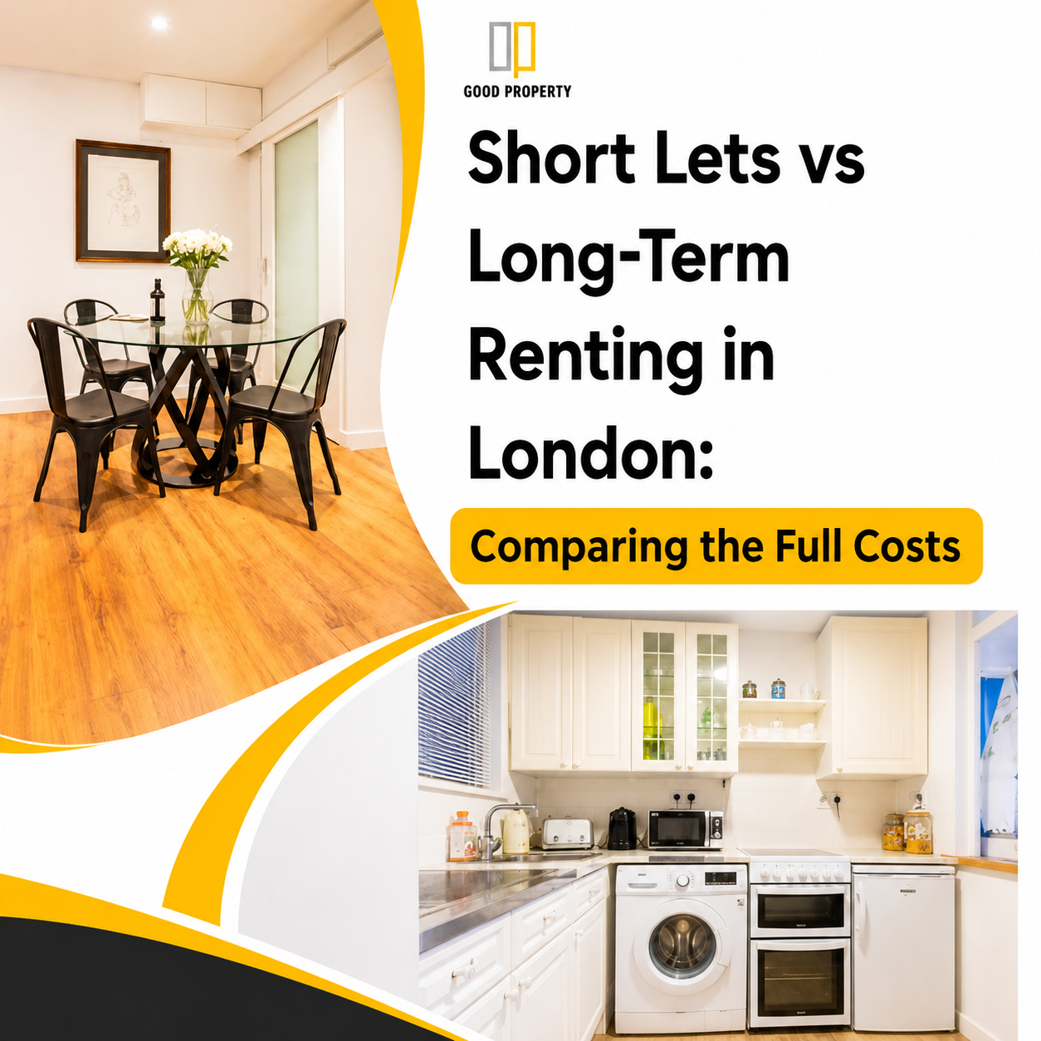
How the two letting models differ
Long-term renting provides a tenant with their main home. Most private assured tenancies in England now operate as rolling agreements without a fixed end date.
Short lets provide furnished accommodation for temporary stays, ranging from a few nights to several weeks or months. Guests may be visiting for holidays, business or temporary relocation. The property is normally equipped for immediate use, with household bills included in the booking price.
The actual arrangement determines which legal rules apply, rather than the booking’s name or duration alone.
Which costs should owners compare?
Some expenses arise under both models. Others depend on how often guests change, what is included in the rent, and whether the owner manages the property themselves.
| Cost | Short Lets | Long-Term Renting |
|---|---|---|
| Initial setup | Furniture, kitchen equipment, photography and guest essentials; linen and towels can be hired. | Preparation, safety checks and furniture if offered furnished. |
| Management | Booking management, pricing, guest communication and changeover coordination, handled by the owner or a paid manager. | Tenant finding, rent collection and ongoing management, handled by the owner or a paid agent. |
| Platform and letting fees | Booking platform commissions and any payment processing fees. | Tenant-finding fees where an agent is used. |
| Cleaning and laundry | Covered by changeover fees charged to guests, including linen and towel hire. | Tenants generally handle routine cleaning during their tenancy. |
| Utilities and internet | Usually paid by the owner and included in the booking price. | Usually paid by the tenant, depending on the agreement. |
| Council tax | Generally an owner expense where the property remains subject to council tax. | Usually the tenant's legal responsibility; the owner generally pays during gaps between tenancies. |
| Maintenance and replacements | Repairs, furniture replacement and replenishment of guest supplies. | Landlord repairs and replacement of supplied appliances or furnishings as needed. |
| Insurance and compliance | Appropriate short-let cover, safety measures and any applicable permissions or licensing costs. | Appropriate landlord cover, safety measures and any applicable licensing costs. |
| Empty periods | Gaps between bookings, seasonal changes and dates reserved for the owner. | Gaps between tenancies and time needed for repairs or preparation. |
| Property ownership costs | Mortgage payments, service charges and other applicable ownership costs. | Mortgage payments, service charges and other applicable ownership costs. |
The amounts will vary by property. An already furnished flat may need relatively little preparation, while an empty property could require a substantial initial investment.
Management and booking fees
Both models can be managed directly by the owner or through a professional service. The comparison should account for the work involved as well as the fee.
Short-let management includes tasks such as adjusting prices, managing availability, answering enquiries, communicating with guests and coordinating cleaning. Long-term management involves finding tenants, collecting rent, arranging repairs and dealing with tenancy matters.
When comparing providers, check what the quoted fee includes, how it is calculated and whether VAT applies. For short lets, platform commissions should be identified separately from management fees so that the same expense is not overlooked or counted twice.
Owners who manage the property themselves should also consider the time they will need to commit, which is often underestimated.
Cleaning, bills and the effect of stay length
Cleaning and laundry are required between short-let bookings. These costs are typically charged to guests through a changeover fee that covers them in full, making them cost-neutral for the owner. Linen and towels are often hired from professional laundry companies, with hire and laundering included in the same fee.
Booking length affects how frequently changeovers are needed. Several short bookings create more changeovers than one extended stay covering the same period. Guest supplies also need a budget.
Utilities, internet and council tax generally remain with the short-let owner. Some costs continue even when the property is empty, while others rise with occupancy.
With long-term renting, tenants usually arrange and pay their own household bills. Owners should nevertheless allow for bills and any applicable council tax during gaps between tenancies.
Maintenance and keeping the property attractive
Both models require a maintenance allowance. Appliances fail, fittings wear out and decoration needs refreshing regardless of how a property is let.
Short-let accommodation also needs to remain consistently presentable for arriving guests. Stained upholstery, worn bedding or tired paintwork can affect the impression made by both the listing photographs and the property itself. Regular, modest improvements can help prevent a larger refurbishment bill from building up.
Do short lets cause more wear and tear?
It is a common assumption, but in our experience of managing both short and long lets, it is often the reverse. A long-term tenant uses the property as their home, sometimes for years. Owners generally rely on periodic inspections to assess its condition, and the full extent of any deterioration may only become apparent when the tenancy ends.
With short lets, the property is cleaned and checked between stays. This provides regular opportunities to identify maintenance needs and address small issues before they become more costly problems. Guest reviews can also encourage guests to treat the property with care.
The cost of redecoration, repairs and replacements after a lengthy tenancy is therefore an important part of the comparison—and one owners often overlook.
Empty periods and unpaid rent are different risks
An empty property produces no rental income, but many expenses continue. For short lets, forecasts should allow for seasonal demand, gaps between bookings and any dates kept available for personal use. For long-term renting, allow for time between tenants and any work required before the next tenancy.
Rent arrears create a separate risk. A property can be occupied without producing the expected income.
If a long-term tenant stops paying and remains in the property, recovering possession can take many months. During that time, the owner continues to meet mortgage payments and other property costs. Court fees and legal expenses can add to the loss, and recovering unpaid rent is not guaranteed.
With short and holiday lets, requiring full payment before arrival substantially reduces exposure to unpaid accommodation charges.
How tenancy changes affect flexibility
Since 1 May 2026, most private assured tenancies in England operate as rolling agreements. Tenants can generally end their tenancy with two months’ notice, while landlords seeking possession must rely on a statutory ground and follow the required process.
Recovering possession to sell or move back in generally requires at least four months’ notice and cannot take effect within the tenancy’s first 12 months. Court proceedings may be needed if the tenant does not leave. Using these grounds also generally triggers a 12-month restriction on re-letting or marketing the property to let, including as a short let.
Genuine short-term accommodation can give owners more flexibility over future use and availability. That flexibility should be weighed alongside the costs, particularly where an owner may want to return to the property or change their plans.
Compare what remains after costs
Higher rental income does not automatically mean a better return. Compare both options over the same period, allowing for realistic occupancy, operating expenses, maintenance and potential rent arrears. The aim is to understand what the owner retains, alongside the flexibility each arrangement offers.
Choosing the right arrangement for your property
Long-term renting can offer fewer changeovers and lower day-to-day operating costs. Short lets involve more active management and owner-paid bills, but advance payment and greater flexibility can be valuable advantages.
The right choice depends on likely demand, the property’s condition, running costs and the owner’s future plans. Comparing income after expenses gives a clearer picture than headline rent alone.
To discuss whether short letting would suit your property, find out more about our full Airbnb management service.
Frequently asked questions
-
They generally involve more owner-paid expenses, including utilities, internet and guest supplies. Cleaning, laundry and linen hire are covered by changeover fees charged to guests. Overall costs should be assessed alongside achievable income and stay length.
-
No. Both models can be managed directly. Owners should compare the cost of professional management with the time, availability and work required to manage the property themselves—a commitment that is often underestimated.
-
There is no universal answer. Compare realistic annual income after expenses, allowing for empty periods, maintenance and the risk of unpaid rent. Flexibility over future use of the property may also influence the decision.